

We regularly review and update our guides to ensure keyboard recommendations, specs, and software information stay current with the latest releases and updates.
Affiliate disclosure: this article contains Amazon affiliate links. Purchases made through these links support Clickyboard at no extra cost to you.
Best silent tactile switches, in brief: Choose the Akko Penguin (Silent) if you want an accessible, pre-lubed starting point; the TTC Silent Bluish White if you prefer a lighter operating force and shorter travel; the Gazzew Boba U4 if a pronounced tactile bump matters most; or the Durock Silent T1 Shrimp if you want a T1-style bump. These are researched options, not switches Clickyboard has sound-tested side by side. None will make a keyboard soundless, and the same switch can sound different in another case.
This guide goes deeper into tactile feel than our broader best silent switches guide. It compares where the bump occurs, how much resistance the makers or sellers publish, what the cushioned landing may feel like, and what to check before installing a set. If you would rather have an uninterrupted press, start with the linear picks in that parent guide.
How we researched this: Published specifications and current product pages were checked on 3 November 2026. We have not measured force curves, loudness or long-term wear ourselves. Descriptions of bump shape and bottom-out are buying guidance, not controlled test results. Check the exact variant before purchase; spring weights, mounting pins and lube can differ between runs or sellers. No price or affiliate claim is made here.
Silent tactile switches compared
| Switch | Published resistance | Travel | Likely feel and trade-off | Fit check |
|---|---|---|---|---|
| Akko Penguin (Silent) | 50 gf operating; 58 ± 5 gf tactile peak; up to 60 gf bottom-out | 3.3 mm total | Defined bump with a shorter, cushioned landing; a sensible first sample | Akko lists 5-pin MX-style mechanical mounting |
| TTC Silent Bluish White | 42 ± 10 gf operating; 58 ± 5 gf tactile peak | 3.5 ± 0.4 mm total | Lighter press with a noticeable bump; short travel will not suit everyone | Check the exact V2 listing and pin version |
| Gazzew Boba U4 | Commonly sold with 62 g or 68 g bottom-out springs; other variants exist | Confirm with the selected seller | Substantial, rounded bump and a soft landing; may feel too resistant to light typists | Confirm spring, housing and mounting variant |
| Durock Silent T1 Shrimp | 52 g actuation; 67 g bottom-out (seller-published) | 4.0 mm listed by OZO; confirm the selected variant | T1-style bump with stem damping; sample it if you dislike cushioned bottom-out | Confirm the listing says Silent T1 Shrimp, not ordinary T1, and that your PCB supports 5-pin MX switches |
Do not compare unlike force numbers as though they were the same. Operating force is the force near electrical actuation; tactile peak is the highest force while crossing the bump; bottom-out is measured at the end of travel. A higher tactile peak can make a switch feel firmer than its operating-force figure suggests. Published tolerances also mean two samples may not feel identical. The Akko Penguin page and TTC Silent Bluish White page publish the figures in the table.
Which bump should you choose?
Akko Penguin (Silent): a practical first sample
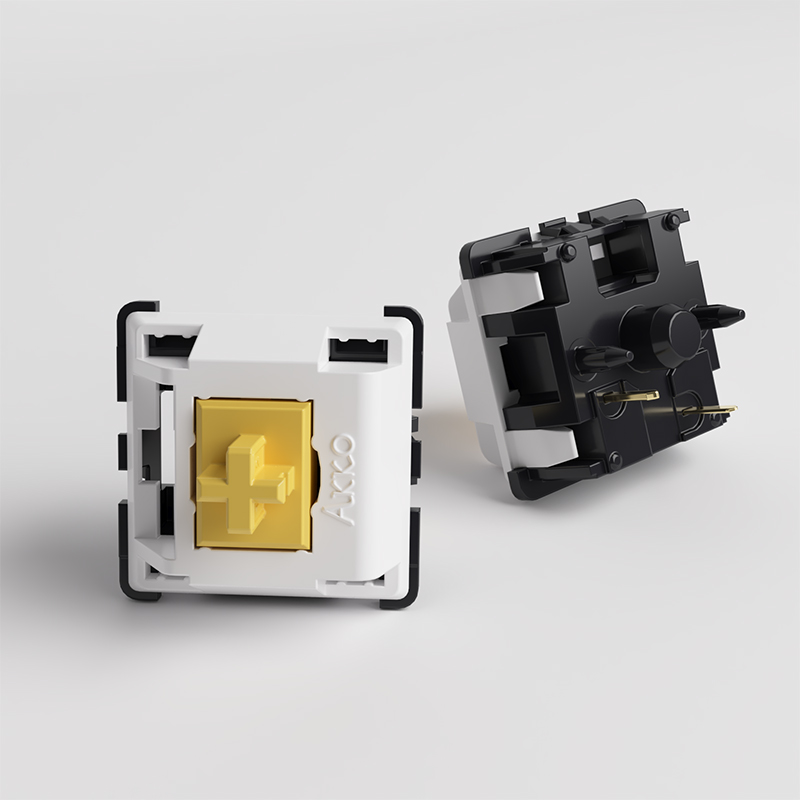
Akko lists the Penguin as a factory-lubed, 5-pin silent tactile with 50 gf operating force, a 58 ± 5 gf tactile peak and 3.3 mm total travel. That combination gives you an identifiable bump without the long travel of a conventional 4 mm switch. Buy a small pack first if you are sensitive to a cushioned bottom-out: damping is the point of a silent switch, but it changes the landing as well as the sound. Check that the listing says Penguin (Silent); other Akko switches with “Cream” or similar names target a different feel and sound.
TTC Silent Bluish White: lighter operation, tactile peak
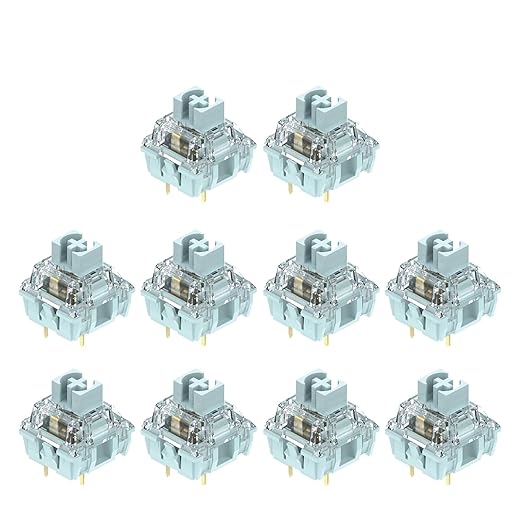
TTC publishes 42 ± 10 gf operating force, a 58 ± 5 gf tactile peak, 3.5 ± 0.4 mm total travel and factory lubrication for its Silent Bluish White. The gap between operating force and tactile peak is why “42 g” alone does not tell the whole story: you still push through a noticeable bump. Its shorter travel may feel quick to some typists and abrupt to others. TTC calls its design “double silent”; that describes its damping approach, not a promise of zero sound. Verify the exact V2 and pin configuration of the pack you buy.
Gazzew Boba U4: for a more substantial bump
The U4 is the silent model to investigate if you want a larger, more rounded tactile event. It is distinct from the U4T, whose “T” denotes the louder, undampened option. Authorized Gazzew sellers list U4 spring options including 62 g and 68 g, and some carry other runs; those are bottom-out spring ratings, not actuation or tactile peak figures. Confirm the exact version and whether the seller has it in stock. The stronger-feeling bump and cushioned stop may be welcome for deliberate typing and tiring for someone coming from a light linear.
Durock Silent T1 Shrimp: for a T1-style bump
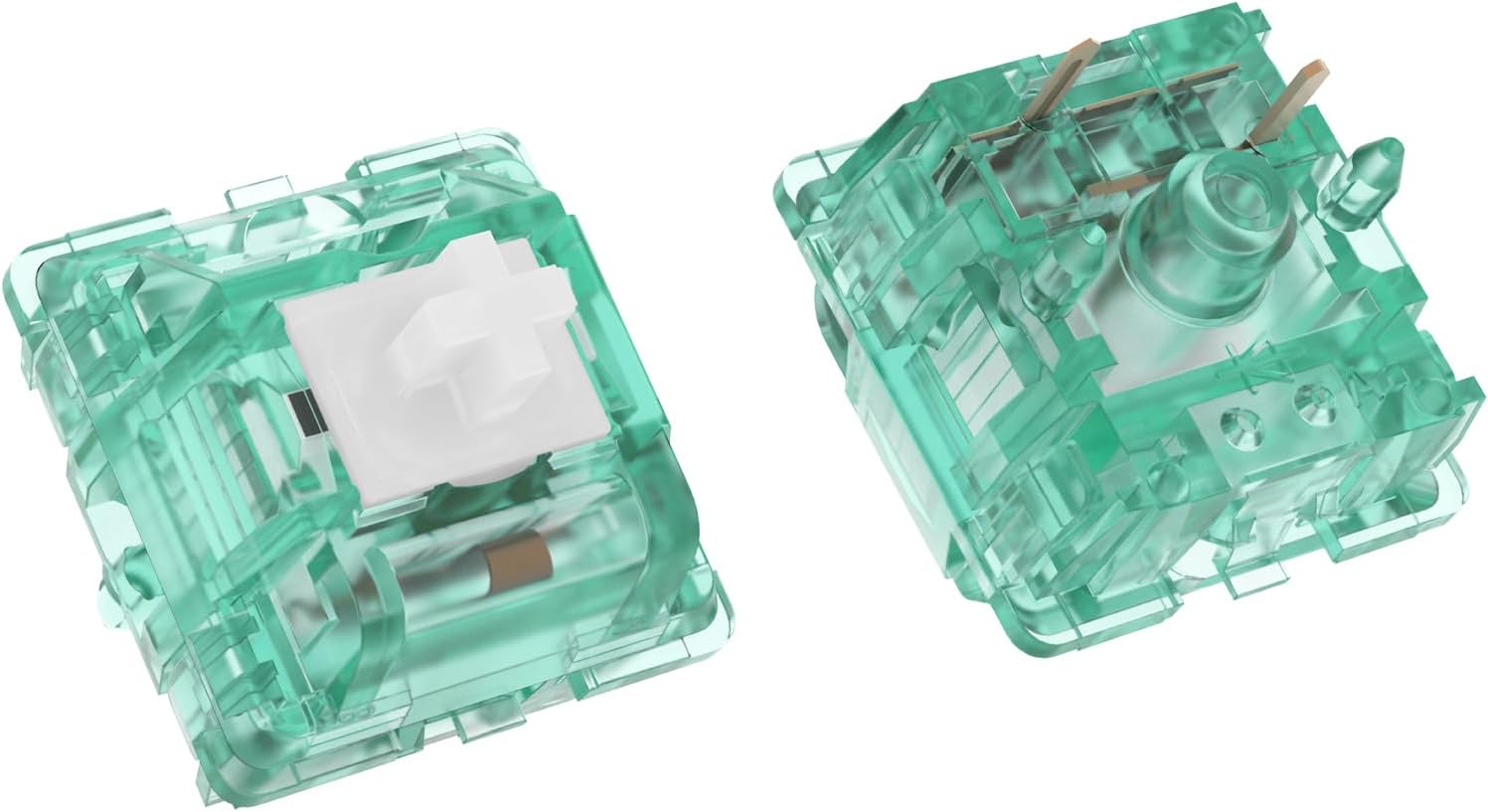
The Silent T1 Shrimp is worth sampling if you like a more distinct T1-style bump than a light tactile offers. OZO Keyboards lists 52 g actuation and 67 g bottom-out, a 5-pin PCB mount, factory pre-lubrication, a turquoise housing and a white POM stem with damping material. OZO lists 4 mm total travel. Its listing and Kinetic Labs both describe factory lubrication, but specifications and stock should be checked on the exact pack you order. Do not substitute an ordinary T1: “Silent” is the part of the product name that matters for noise. Check the selected pack and your board’s MX socket before buying. We do not assign it a measured loudness or declare it quieter than the U4, TTC or Penguin without a controlled comparison in the same keyboard.
The trade-offs that matter more than a ranking
- Bump shape: a broad bump can feel reassuring or tiring; a shorter bump can feel clearer or less substantial. Force numbers cannot fully describe its shape.
- Bottom-out: stem damping cushions impact and can feel soft. A silent tactile does not guarantee a crisp landing.
- Return noise: listen for the upstroke as well as the downstroke. A desk recording from one board is not a universal quietness ranking.
- Board noise: stabilizers, keycaps, plate and case can dominate the sound after the switches are damped. Diagnose rattly long keys with our stabilizer guide.
Check compatibility before ordering a full set
First establish that your board takes standard-height MX-style mechanical switches. Optical, Hall-effect and some low-profile sockets need their own switch families even when a keycap cross looks familiar. Next check whether the PCB has holes for the extra plastic legs of a 5-pin switch and whether the board is hot-swappable. A soldered switch requires desoldering. The full 3-pin vs 5-pin guide explains how to inspect the socket and when trimming plastic locating pegs is appropriate. Buy a few samples and test them in the actual board before purchasing enough for every key.
Make the whole keyboard quieter
Swap a few letter keys first and compare the same typing passage before and after, using the same board, keycaps and recording position. If the spacebar still rattles, tune its stabilizer instead of changing another switch. If the case sounds hollow, look at the board’s internal damping and desk surface. O-rings can soften keycap bottom-out on some existing switches, but they do not address the return stroke and can shorten travel. The goal is a less distracting keyboard, not silence.
Frequently asked questions about silent tactile switches
Are silent tactile switches actually silent?
They reduce impact noise rather than eliminate every sound. A tactile bump does not require the deliberate click mechanism of a clicky switch, but the spring, return stroke, stabilizers and keyboard case can still be audible. Choose them to reduce distraction; do not expect a soundless keyboard or assume a switch recording predicts your complete build.
Are silent tactile switches good for gaming?
They can be, especially when you want feedback without disturbing someone nearby. The bump and spring resistance are preference decisions, not a universal performance advantage. Try repeated presses and held movement keys before buying a full set. If you prefer an uninterrupted press, compare the silent linear options in our silent-switch guide. Our tactile vs linear comparison explains the difference in feel.
Why do some silent switches feel mushy?
The damping material can compress when the stem reaches the end of its movement, softening the stop. Whether that feels comfortable or vague depends on the design and your typing pressure. A firmer spring does not necessarily remove the cushioned landing. Test several keys in your own board, including longer typing sessions, before committing.
Should you lubricate silent tactile switches?
Try the factory condition first. Extra lubricant can change tactile feedback, and it is not a reliable cure for a damping feel you dislike. Follow the switch maker’s guidance: Ringer Keys specifically advises keeping lubricant off U4 silencing bumpers because it can create a sticky feel. Do not apply lubricant blindly through an assembled switch.
Are Brown switches the same as silent tactile switches?
No. “Brown” is commonly used for a tactile option within a manufacturer’s range; it does not certify internal sound damping. For example, a conventional Cherry MX Brown is not the same product as a purpose-built silent tactile. Check the exact model’s silencing design rather than choosing by stem colour. See our Cherry MX Brown guide for the distinction.
Choose a sample before choosing a full set
Start with the Penguin if you want a straightforward factory-lubed option, compare the TTC if lower published operating force appeals, and sample the U4 or Shrimp if you are exploring a more pronounced bump. These are starting points rather than measured winners. Test the same keycaps on the same board and compare comfort as well as downstroke and return noise. Calculate the full delivered cost for your layout, including spare switches, before ordering.
Availability note: stock varies by spring weight, housing and pack size. During our 3 November 2026 check, Kinetic Labs showed its Shrimp packs out of stock and Ringer Keys displayed a sold-out state alongside variant-dependent ordering guidance. A product page is a specification reference, not a guarantee that your selected version is available.
Specification sources and limits
Product specifications: Akko Penguin (Silent) and TTC Silent Bluish White. U4 spring variants and stock: Ringer Keys, an authorized Gazzew seller. Durock Silent T1 Shrimp specifications: retailer listings from Kinetic Labs for the silent tactile design and factory lube, and OZO Keyboards for 52 g actuation, 67 g bottom-out, 4 mm travel and 5-pin mounting. Check the exact seller listing because variants can differ. All sound and feel descriptions should be treated as expectations to check with samples; Clickyboard has not published a controlled comparison of these four.